Computational biology / Research prototype
Boltz-2 Affinity Embedding Modeling
Per-target ligand affinity models built from Boltz-2 affinity-module embeddings and benchmarked against scalar model outputs.
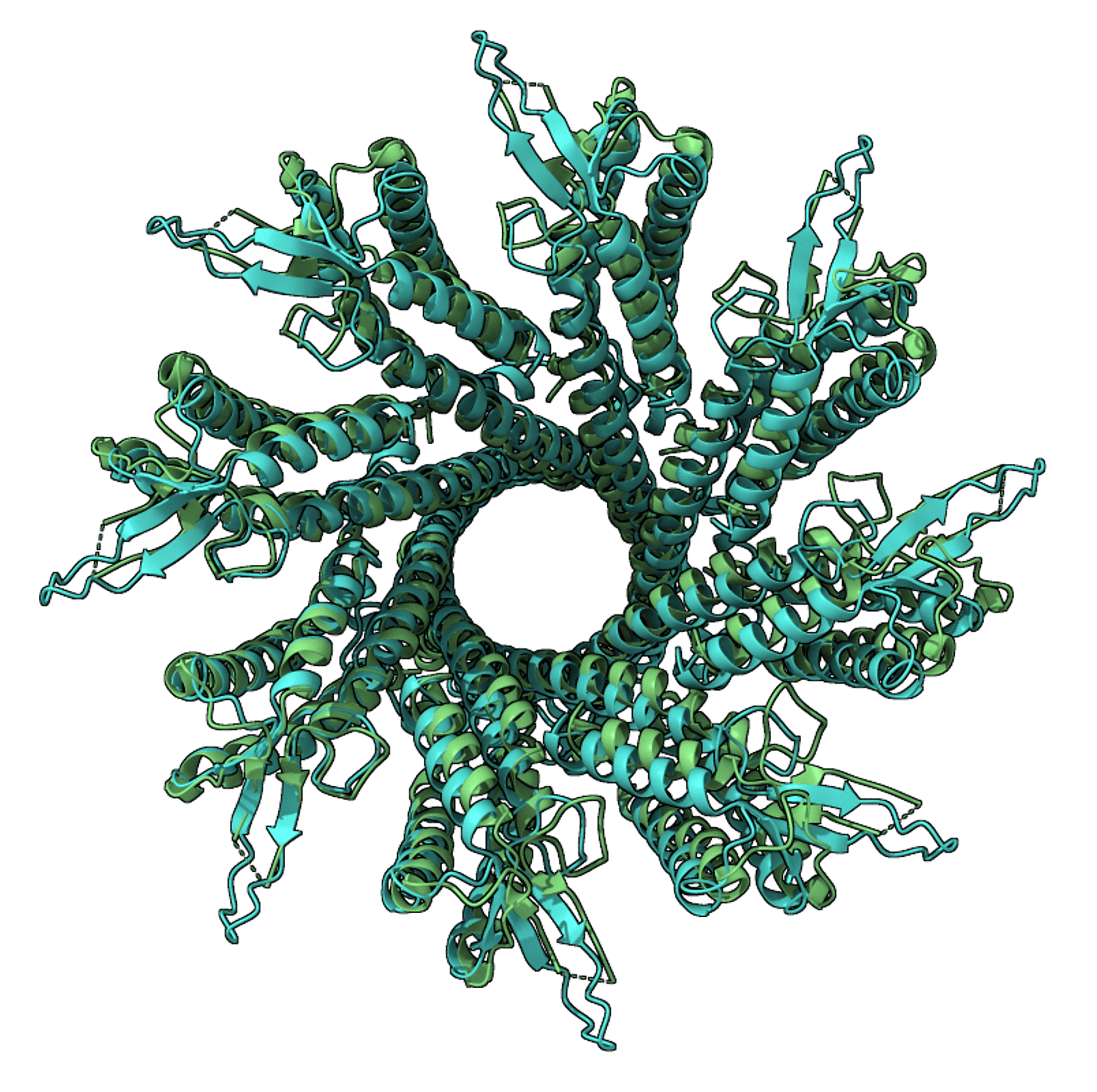
Thumbnail artwork: Boltz protein structure render by jwohlwend/boltz , licensed under MIT License . Displayed unmodified and scaled for layout.
Research Pipeline
Affinity Embedding Extraction
- 01Extract
Run Boltz-2 to generate internal affinity module embeddings rather than relying solely on scalar output.
- 02Baseline
Evaluate embeddings on ~900 typical ligand pairs via classification and regression models.
- 03Augment
Append Ligand-Residue Interaction Profile Scoring Function (LRIP-SF) for added structural features.
- 04Generalize
Switch to peptide-target complexes to test predictor performance in an out-of-distribution domain.
Problem
Published biomolecular models can expose useful internal representations, but it is not obvious whether those embeddings improve target-specific affinity prediction.
Approach
I built a Python pipeline that joins ULVSH labels, Boltz scalar outputs, docking features, and extracted affinity embeddings into comparable feature sets.
Result
The pipeline writes target-specific datasets, manifests, cross-validation metrics, predictions, and saved model artifacts.